








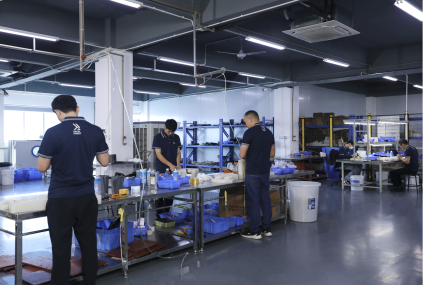
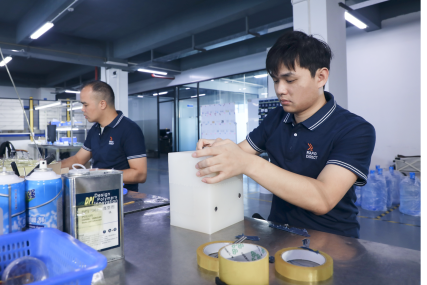
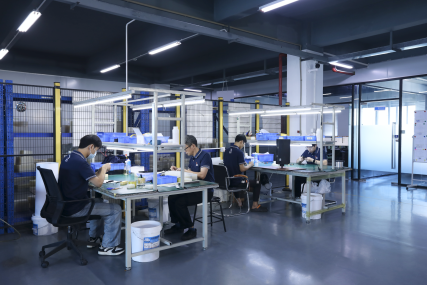

हम 1 दिन जितनी तेज़ लीड टाइम के साथ, सरल और जटिल दोनों तरह के पुर्जे संभालते हैं।

Vacuum Casting Service

Custom urethane parts from prototyping to small production runs. ±0.01mm tolerance. 5 days delivery.

Tolerance
± 0 mm
Machines
0 +
Samples Delivered
0 Days
13485, 16949, 14001
0 ISO

Termite Precision Urethane Casting Service

Termite Precision’s urethane casting services support every stage from prototype testing, function validation and market testing phases. Operating from ISO-certified facilities and vetted manufacturing partners, we ensure you stay on sechedule and within budget. We cast urethane parts with tolerances down to ±0.10mm and lead times as short as 5 days. A variety of polyurethane and silicone materials, surface finishes, and color options are available for applications in automotive, electronics, and consumer products.

Termite Precision Vacuum Casting Capabilities

Details
ToleranceDetails At RapidDirect, replicated casts follow ISO-2768-CL standards. Local tolerances can reach ±0.15mm, and small holes can achieve up to ±0.10mm precision.
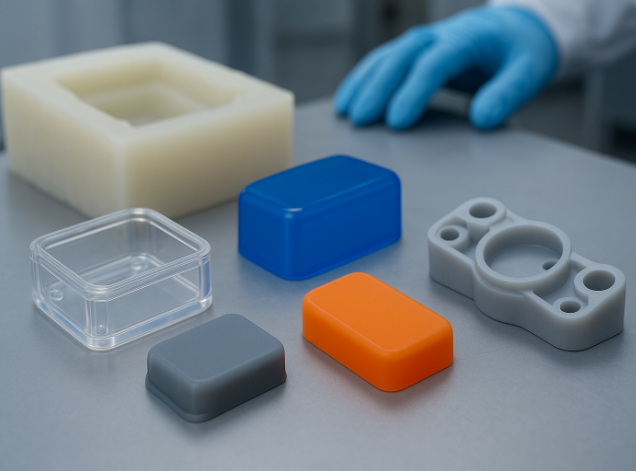
Color and FinishingDetails Supports a wide range of colors, transparency levels, and surface finishes.
Maximum Part SizeDetails Up to 2.3 × 1.3 × 0.6 meters.
Daily CapacityDetails Up to 200 pieces per day.
Lead TimeDetails Lead time varies based on part complexity and order volume. The full process includes prototype making, silicone mold creation, casting, and finishing. Simple single parts can ship in under 5 days, but larger batches may require more time depending on the project.

From Prototyping to Production

Moving from initial concepts to market-ready products, Termite Precision’s vacuum casting services offer cost-effective solutions for your product development.

Concept Validation

Quickly turn early designs into real parts using 3D printing. Great for checking size, shapge, and surface finish before moving forward. No need for hard tooling at this stage.

Prototyping

Make 1 to 100 functional vacuum cast prototypes for testing fit, strength, and usability. Materials and tolerances are close to final production.

Low Volume Production

Perfect for low-volume runs, product launches, or bridge production. Cast 20 to 200+ parts with consistent quality and quick turnaround—skip the wait for injection molds.

Mass Production

For larger production needs, we offer injection molding to create high-volume plastic parts with consistent quality and lower unit cost.
Vacuum Casting Materials, Finish, Colors

Certified Quality Control and Testing

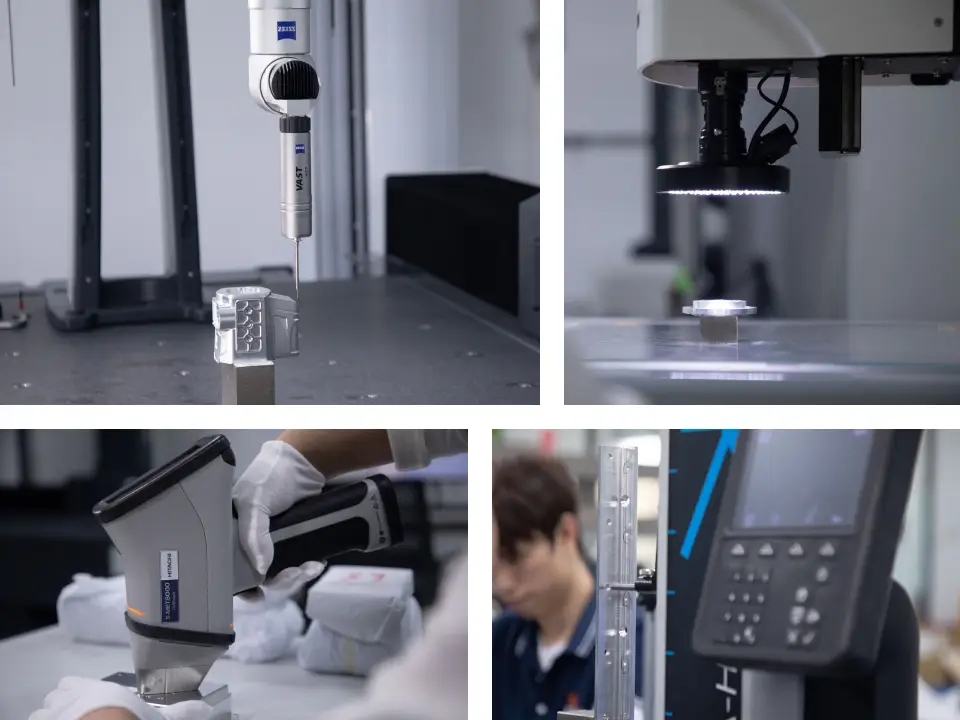
Termite Precision operates as an ISO 9001:2015, ISO 13485, ISO14001:2015, and IATF 16949:2016 certified vacuum casting manufacturer. Our quality control covers three critical areas:

Dimensional Testing

Dimensional testing uses CMM, digital calipers, height gauges, and micrometers to verify tolerances, geometric positioning, hole diameters, wall thickness, and fit dimensions.

Visual Inspection

Visual inspection employs magnifiers, roughness testers, and color charts to detect surface defects including bubbles, scratches, dents while ensuring color consistency and surface finish quality.

Paint Adhesion Testing

Paint adhesion testing validates coating bond strength, durability, and thickness uniformity for all finishing requirements.

Why Choose Termite Precision Urethane Casting Services

Guaranteed Precision & Quality

Achieve tight tolerances from ±0.1 to 0.8mm. Excellent surface finishes. Expert mold-making ensures consistent quality.

Comprehensive Material Solutions

Choose from soft, rigid, clear, and flame-retardant polyurethane materials. We help you pick the right material, finish and color. Support custom needs.

Rapid Turnaround

Get parts delivered in 5-15 days. Cost-effective low-volume production. Flexible order sizes from 20-200+ parts.

What's Urethane Casting Process?

Urethane casting, also called vacuum casting, draws liquid urethane into a mold to create plastic and rubber parts with intricate geometries. Here are the 3 steps.  

The master pattern replicates the final casting parts, determining product quality. Create it via CNC machining or 3D printing. 3D printing is faster and cheaper, but CNC offers tighter tolerances. Design considerations include draft angles and wall thickness.

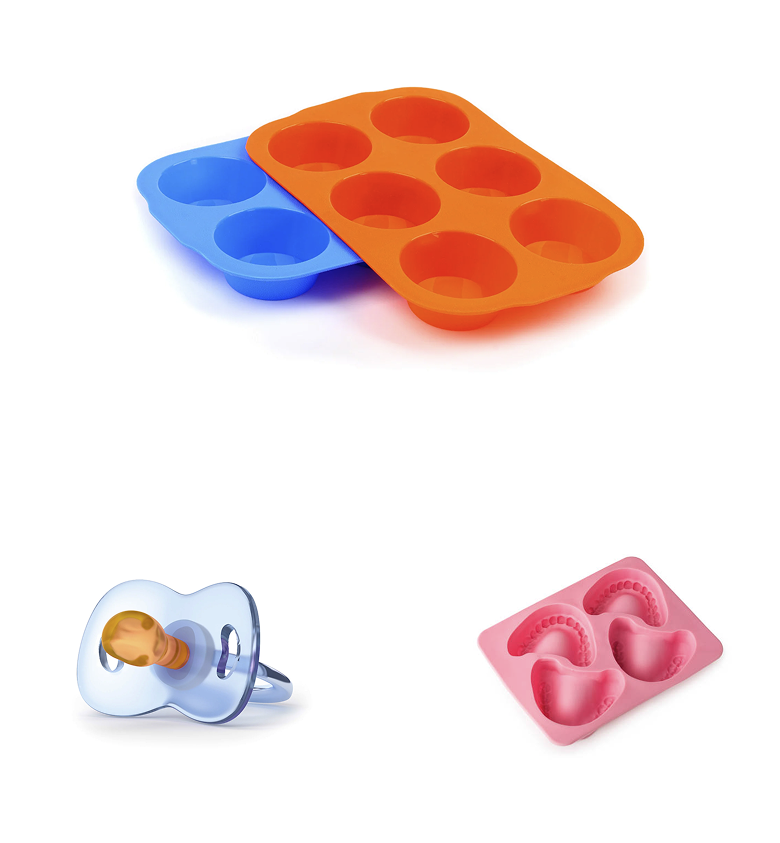
Pour liquid silicone rubber around the master pattern. Most cure in ovens, while RTV molds cure at room temperature. After a few hours, cut along the parting line to remove the master, creating a silicone mold ready for casting.

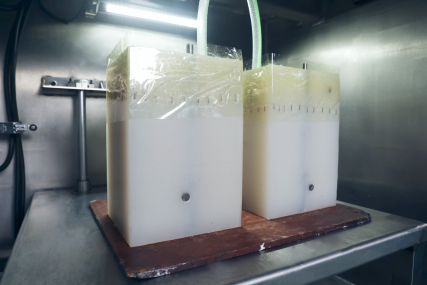
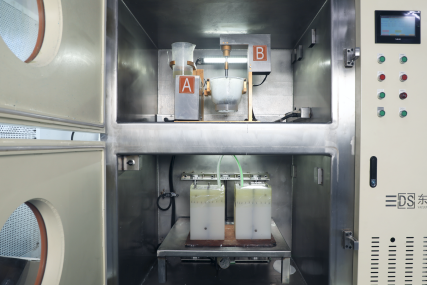
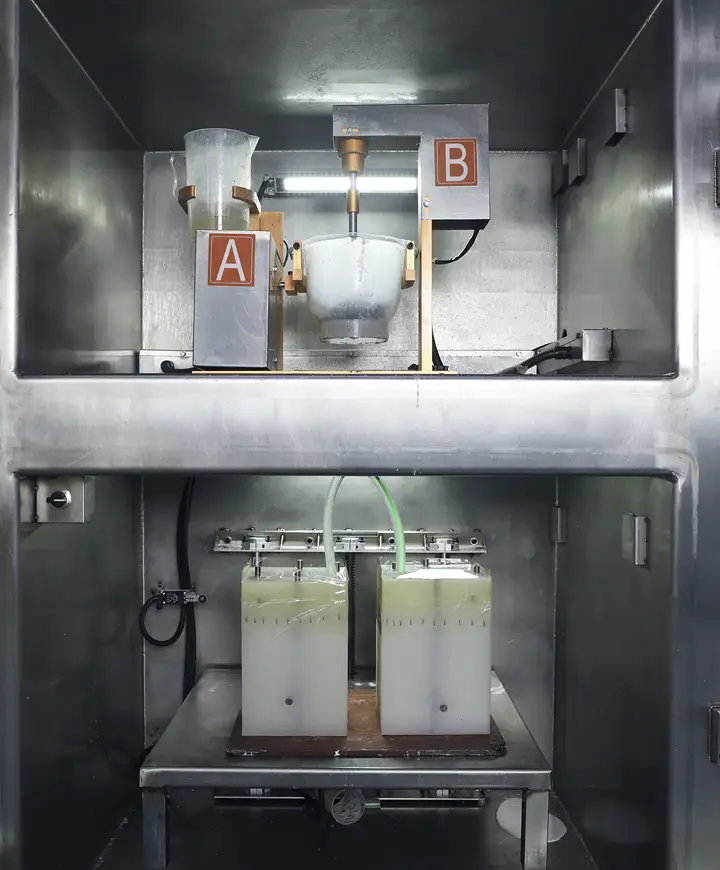
Mix liquid polyurethane resin and pour into molds under vacuum to prevent air bubbles and defects. Curing takes 30 minutes to 2 hours depending on material and size. One mold produces 1-10 copies daily. Cast urethane parts may require post-processing.

Vacuum Casting Applications Across Industries

Urethane casting is good for prototypes and small production runs where injection mold tooling isn’t practical. Cast part perform well and can be used for testing or as finished products.

| Automotive

Interior trim panels, dashboard components, and functional prototypes for fit-and-finish testing.

| Medical & Healthcare

Biocompatible device housings, surgical instrument prototypes, and diagnostic equpment.

| Electronics & Consumer Products

Product enclosures, keypads, and decorative elements for smarphones, tablets, and home appliances.

| Aerospace

Lightweight interior panels, control housings, and specialized components requiring flame-retardant properties.

3D Printing vs Vacuum Casting vs Injection Molding

Your project’s stage, quantity, and part function will guide the right manufacturing choice. Different methods work best at different points in development.
VS3D PrintingVacuum MoldingInjection Molding
VS Tooling Cost3D Printing $0 (no tooling)Vacuum Molding $500-2,000 (silicone molds)Injection Molding $5,000-50,000+ (aluminum  or steel molds)
VS Lead Time3D Printing 1-3 daysVacuum Molding 5-15 daysInjection Molding 4-12 weeks
VS Part Quantity3D Printing 1-20 partsVacuum Molding 20-200 parts optimalInjection Molding 1,000+ parts optimal
VS Tolerance3D Printing ±0.1-0.3mmVacuum Molding ±0.1-0.8mmInjection Molding ±0.05-0.1mm
VS Surface Finish3D Printing Layer lines, requires post-processingVacuum Molding Smooth, minimal finishingInjection Molding Superior, production-ready
VS Complex Geometry3D Printing Excellent, any shapeVacuum Molding Handles undercuts, fine detailsInjection Molding Limited by mold design
VS Material Options3D Printing Limited to print resins/filamentsVacuum Molding Urethane varieties (flexible to rigid)Injection Molding Wide range of thermoplastics
VS Design Changes3D Printing Instant, no cost penaltyVacuum Molding Easy and cost-effectiveInjection Molding Expensive mold modifications

FAQs

How accurate are cast vacuum parts?

Vacuum cast parts typically achieve tolerances of ±0.1–0.3mm, depending on part geometry and size. The process offers excellent detail and surface finish, suitable for functional prototypes and end-use parts.

Urethane casting is a cost-efficient option for runs of 20 to 200+ parts. It avoids the high cost and lead time of hard tooling. Suitable for short runs, bridge production, or early market test.

Vacuum casting offers better surface finish, material strength, and consistency for low-volume production. 3D printing is faster for one-off prototypes but may fall short in appearance or mechanical properties.

Silicone molds typically last for 15–25 castings, depending on part complexity and material used. They’re best for small batches before wear affects precision.

In vacuum casting, the silicone mold must stay firmly in place to produce accurate parts. This is done using a two-part mold secured inside a rigid frame, often made of aluminum or durable plastic.

The frame supports the mold, keeps it from warping under vacuum, and ensures the two halves align correctly. It also helps prevent resin leaks and maintains a tight seal during casting.

हमसे संपर्क करें

    आपका उद्योग *

    2D/3D ड्रॉइंग अपलोड करें

    अपनी फ़ाइलें अपलोड करें या संपर्क करें 1@yzkjcnc.com तत्काल कोटेशन प्राप्त करने के लिए (कृपया 2D CAD ड्रॉइंग और 3D CAD मॉडल किसी भी फॉर्मेट में संलग्न करें, जैसे STEP, IGES, DWG, PDF, STL, ZIP, आदि)।.

    अधिकतम फ़ाइल आकार: 20MB

    परियोजना विवरण (कृपया शामिल करें: भाग का नाम / मात्रा / सामग्री / रंग / सतह फिनिश)