












wir bearbeiten sowohl einfache als auch komplexe Teile mit Lieferzeiten von nur 1 Tag

Custom Die Casting
Dienstleistungen

From rapid prototypes to high-volume production runs, RapidDirect’s die casting services have you covered. We work with aluminum, zinc, and magnesium, and handle everything from tooling to finishing—plus, our experts make sure your die cast parts turn out just the way you need.

20,000+ customers in over 120 countries & regions trust RapidDirect to manufacture their custom parts

Die Casting Manufacturer with Advanced Production Facilities

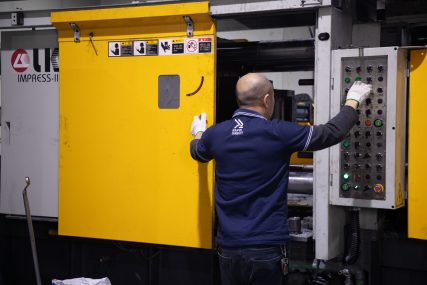
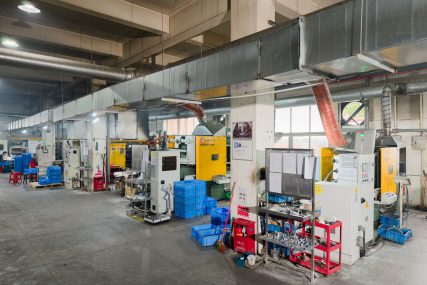
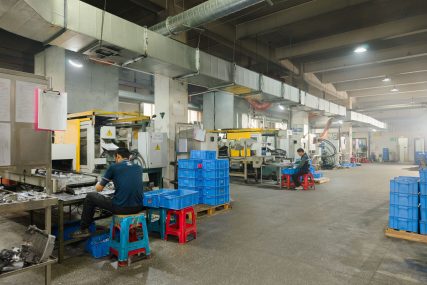
Termite Precision is a certified die casting manufacturer equipped with 60+ advanced die casting machines, serving global customers across automotive, industrial, robotics, and electronics industries.

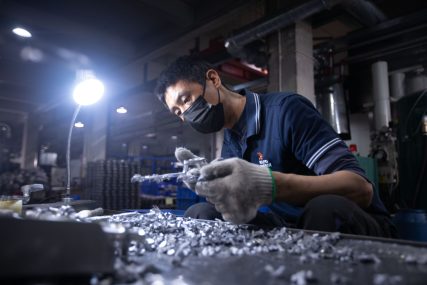
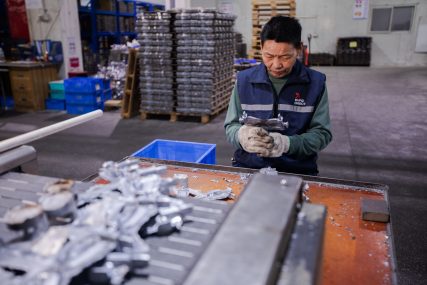
Our factory in Shenzhen, China, integrates die casting tooling, high pressure die casting production, CNC machining, and finishing under one coordinated system—ensuring consistent quality and fast turnaround.

Die Casting Machines
0 +
Tight Tolerance
0 ''
9001, 16949, 13485
0 ISO
Fast Lead Time
0 Day

Termite Precision Die Casting Capabilities

Details
ToleranzDetails High-precision die casted parts need secondary machining to meet tolerance requirements, achieving accuracy up to ±0.01mm
Minimum Wall ThicknessDetails Aluminum alloy recommended 1.5mm, zinc alloy can go down to 0.8mm
Wall Thickness RatioDetails Keep within 1:3 ratio to avoid uneven filling
Hole DiameterDetails Due to high temperatures during aluminum die casting mold processing, round holes smaller than 3mm diameter require secondary drilling. Product threaded holes and external threads are formed through secondary machining.
Draft AngleDetails Minimum 0.5° to avoid demolding difficulties
Maximum Die Life (Number of Cycles)Details Zinc: 1,000,000 Magnesium, Aluminum: 100,000
MOQsDetails 500-1000 pieces
VorlaufzeitDetails 20-25 days. Specific timing varies based on mold type and product structure complexity

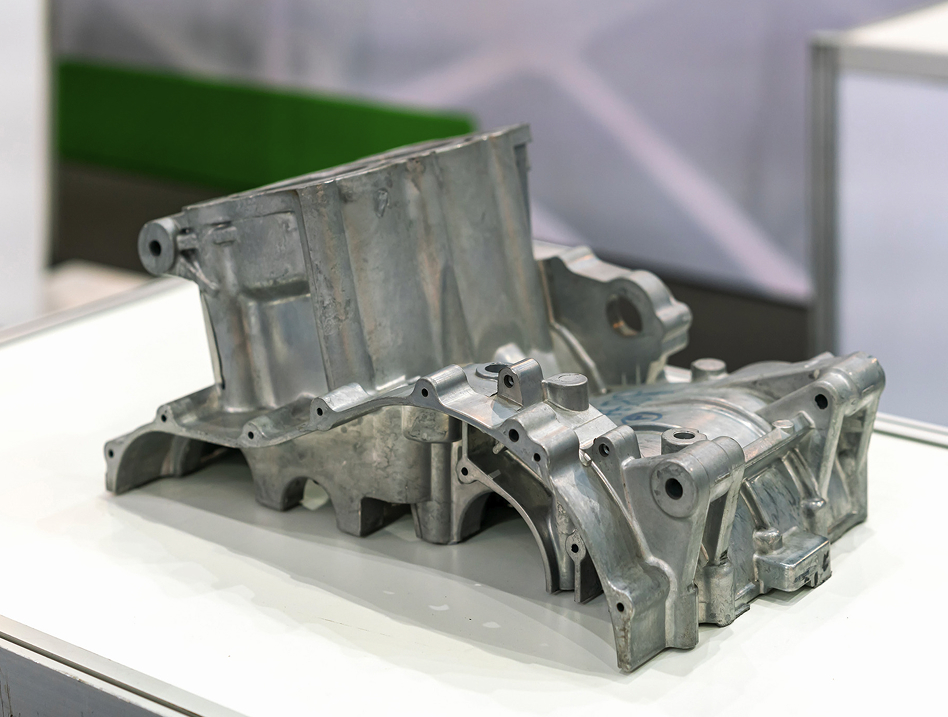
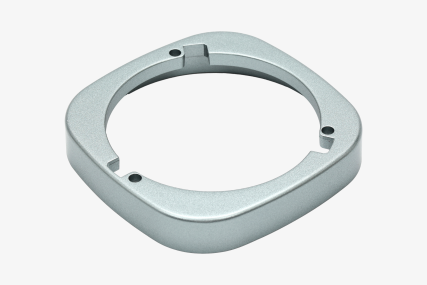
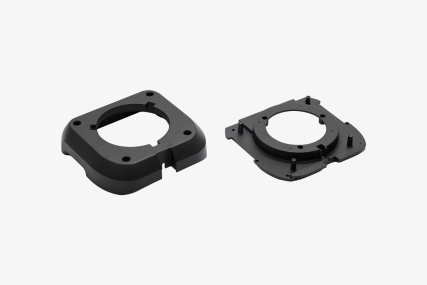
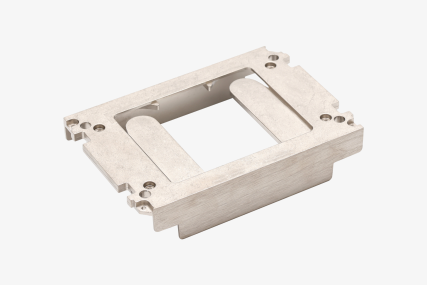
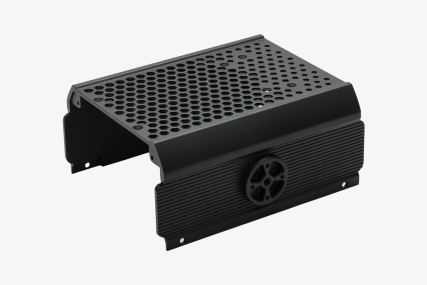
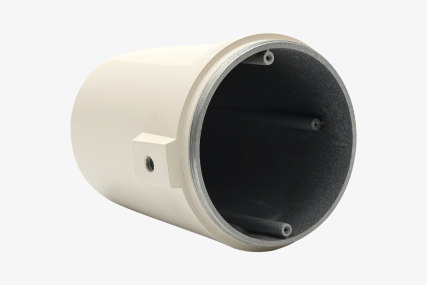
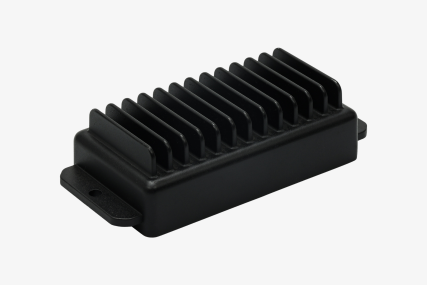
Die Casting Parts We Manufactured

Types of Die Casting Processes at Termite Precision

To support a wide range of project needs, Termite Precision provides three types of die casting services, suited for different materials and deisgn complexities. We primarily apply hot and cold chamber casting. For components with tight tolerances and strong structural requirements, we offer advanced processes like semi-solid casting.

Cold Chamber Die Casting

Cold chamber die casting melts metal in a separate furnace before casting. The molten metal is poured into a cold chamber, where a piston pushes it into the die under high pressure. The process handles high melting point metals like aluminum. The separation prevents contamination and extends die life. This type of die casting produces car engine parts, aircraft components, and electronic housings where strength and precision matter

Hot Chamber Die Casting

Hot chamber, or gooseneck casting, connects the melting furnace directly to the casting machine. A piston pulls molten metal from the furnace and injects it straight into the die. This creates faster cycle times and reduces waste since the metal stays hot throughout the process. The process suits low melting point metals like zinc, magnesium alloys. The direct connection allows efficient high-volume production of toys, hardware, decorative items, and small mechanical parts.

Semi-solid Die Casting

Semi-solid die casting uses metal in a paste-like state between liquid and solid. The metal is heated to this semi-solid condition, then slowly pushed into the mold with less turbulence than liquid metal. This process reduces porosity and creates stronger parts with better surface finish. Semi-solid casting applies to aluminum and magnesium alloys effectively. The controlled flow produces automotive parts, aerospace components, and applications that need high strength and quality.

Die Casting Materials & Finish

Typical Die Casting Parts and Industry Applications

die casting are widely used to manufacture structural and functional metal components that require dimensional stability, strength, and repeatability.

Medical die casting

Precision housings and device enclosures requiring dimensional stability and clean surface finish.

Automotive die casting

Engine housings, transmission cases, motor brackets, and structural supports requiring high strength and thermal resistance.

Robotik

Precision brackets, gearbox housings, actuator components, and load-bearing structural parts.

Konsumgüter

Aluminum enclosures, LED heat sinks, internal frames, and protective housings for compact electronic devices.
Qualitätssicherung

At Termite Precision, quality drives every step—from the tools we use to the standards we uphold. Our ISO 9001, ISO 14001, and IATF 16949 certifications guarantee consistent excellence.

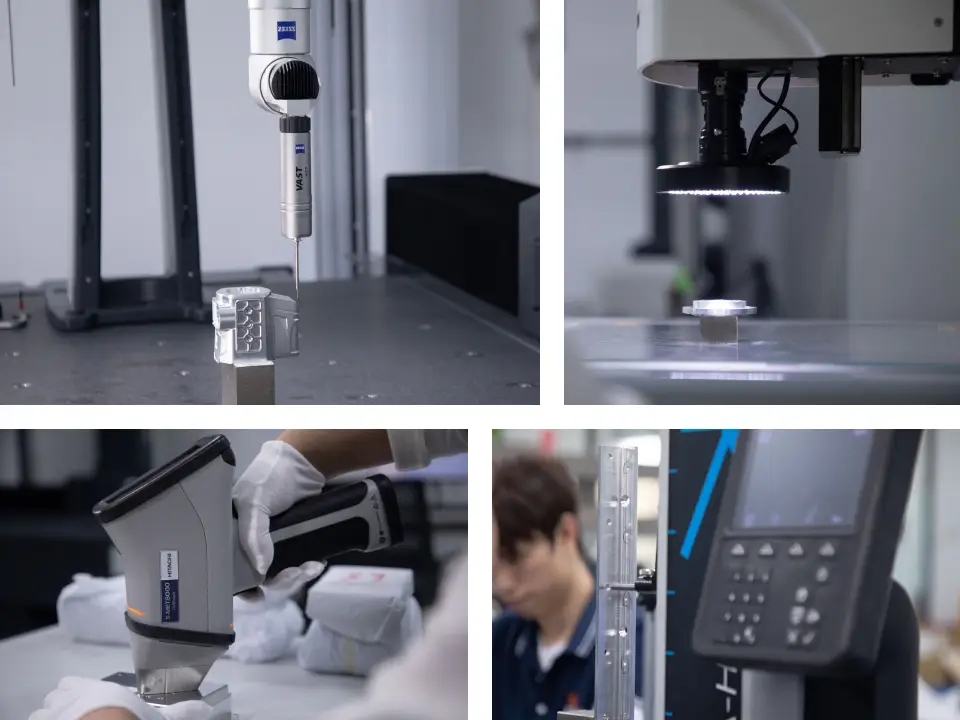
Advanced Inspection Equipment

We use professional testing equipment for precise measurement and verification. Spectrometers analyze metal composition, coordinate measuring machines inspect complex 3D shapes, 2.5D instruments verify detailed features, and height gauges handle basic dimensions.


Comprehensive Testing Procedures

Parts go through four main tests: material analysis, durability testing, corrosion testing, and functional testing. These check your parts meet composition specs, handle tough conditions, resist environmental damage, and seal properly when needed.


Proven Quality Standards

Over 90% of parts pass first article inspection. And if there’s ever a quality issue, we’ll remake it for free. Every part gets checked before it leaves our facility.

Ready to see our quality standards in action? Get your quote today and experience the difference.

Why Choose Termite Precision Die Casting Services

Cost-effective Solutions

We reduce your die casting costs through expert mold design and free DFM analysis, ensuring the most efficient material usage.

Fast Lead Time

Leveraging our in-house facilities and certified factory network, we deliver die casting samples in as little as 1 day with real-time project tracking.

Qualitätssicherung

ISO 9001:2015 certified. Strict quality checks at every step. We inspect parts pre-production, in-production, first article inspection, and pre-delivery.. Tight tolerances down to ±0.01mm.

FAQs

How much does a die casting project cost?

There is no “one-size-fits-all” price in die casting because costs depend on four key drivers: tooling (the mold), material volume, part complexity, and production quantity.
Production Volume: The higher your volume, the lower the per-part cost, as tooling expenses are amortized over more units.
Complexity: Features like undercuts, tight tolerances, or thin walls add to design and tooling complexity.

Tip: To get a precise quote, upload your CAD files today. Our engineers will perform a free DFM (Design for Manufacturing) analysis to help you identify cost-saving design optimizations before you spend a dime on tooling.

  • High-Speed Production: Perfect for scaling from hundreds to thousands of parts.

  • Superior Surface Finish: Get smooth, retail-ready parts straight from the mold.

  • Tight Tolerances: Consistency guaranteed up to ±0.01mm.

  • Complex Geometries: Achieve intricate designs in a single production step.

How does RapidDirect minimize porosity in die cast parts?

When designing parts for die casting, several key considerations must be addressed to ensure optimal performance and manufacturability:

  • Wall Thickness: Maintain uniform wall thickness to promote even cooling and solidification, reducing risks of defects like warping or internal stresses. Thin walls are preferred for faster cooling and material savings, but their feasibility depends on the metal used and part complexity.
  • Draft Angles: Include draft angles in the design to facilitate the easy removal of the casting from the die. Typically, a minimum draft angle of 1 to 2 degrees is necessary, depending on the depth of the part.
  • Fillet and Radii: Incorporate fillets and radii to eliminate sharp corners and edges, which can cause stress concentrations and crack initiation points. This adjustment also enhances the flow of molten metal within the die.
  • Gating System: Design an efficient gating system to ensure proper flow of the molten metal into the die, minimizing turbulence and air entrapment. The placement of gates influences material distribution and part quality.
  • Venting: Proper venting must be planned to allow air and gases to escape from the mold cavity during metal injection. This helps prevent porosity and incomplete filling.
  • Simplifying Geometry: Simplify the geometry as much as possible to avoid undercuts and complex features that require intricate die mechanisms, which can increase tooling costs and complicate the casting process.

Yes, post-machining of die cast parts is not only possible but often necessary to achieve the desired precision and surface finishes that die casting alone might not provide. Post-machining allows for the attainment of tighter tolerances and smoother surfaces, which are crucial for high-performance and aesthetic requirements. Common post-machining processes include drilling, milling, and CNC machining, which refine the features of the die cast part to exact specifications.

Additionally, post-machining can correct any minor defects that occur during the casting process, such as porosity or surface imperfections. It also enables the addition of complex features and fine details that cannot be achieved through casting alone. By integrating die casting with post-machining, manufacturers can leverage the speed and cost-efficiency of die casting for the rough shape, while achieving the precision of CNC machining for critical dimensions and finishes.

The die casting process is a high-pressure manufacturing method where molten non-ferrous metal is injected into a precision-engineered steel mold (die). At RapidDirect, we follow a rigorous 5-step process to ensure every part meets your exact specifications:

  1. Preparation & Clamping: We start by lubricating the die cavities to ensure easy part ejection and temperature control. The two halves of the mold are then securely clamped under high pressure.

  2. Injection: Molten metal (aluminum, zinc, or magnesium) is forced into the die at high speed and pressure (typically between 1,500 and 25,000 psi). This ensures the metal fills even the most intricate geometries.

  3. Cooling & Solidification: The metal quickly solidifies inside the mold. Our advanced cooling systems ensure uniform temperature distribution to minimize internal stresses and warping.

  4. Ejection: Once cooled, the die opens, and the “shot” (the part plus the excess material like gates and runners) is ejected via hydraulic pins.

  5. Trimming & Finishing: The excess material is trimmed away. Depending on your needs, we then perform secondary CNC machining or surface finishing (such as powder coating or anodizing) to complete the part.

Kontakt US

    Ihre Branche *

    Hochladen von 2D/3D-Zeichnungen

    Hochladen Ihrer Dateien oder Kontakt 1@yzkjcnc.com um ein sofortiges Angebot zu erhalten (Bitte fügen Sie 2D-CAD-Zeichnungen und 3D-CAD-Modelle in jedem Format bei, einschließlich STEP, IGES, DWG, PDF, STL, ZIP usw.).

    Maximale Dateigröße: 20MB

    Projektdetails (Bitte geben Sie an: Teilename / Menge / Material / Farbe / Oberflächenbehandlung)